Cuba to the World
Cubavisión Internacional is Cuba's international-reach television channel, created to project Cuban culture, history, and daily life to audiences in Latin America, Europe, Africa, and other regions of the world.
Founded in 1986, the channel broadcasts diverse programming including news, sports, documentaries, cultural programs, series, and Cuban music. It is one of the most important media outlets through which Cubans living abroad maintain contact with their island.
Cubavisión Internacional operates under the Cuban Institute of Radio and Television (ICRT) and is part of Cuba's state media system. Its signal reaches dozens of countries via satellite, cable, and digital platforms.

The historic Radiocentro CMQ building in Havana — the historic home of Cuban radio and television. Photo: Wikimedia Commons (CC BY-SA)
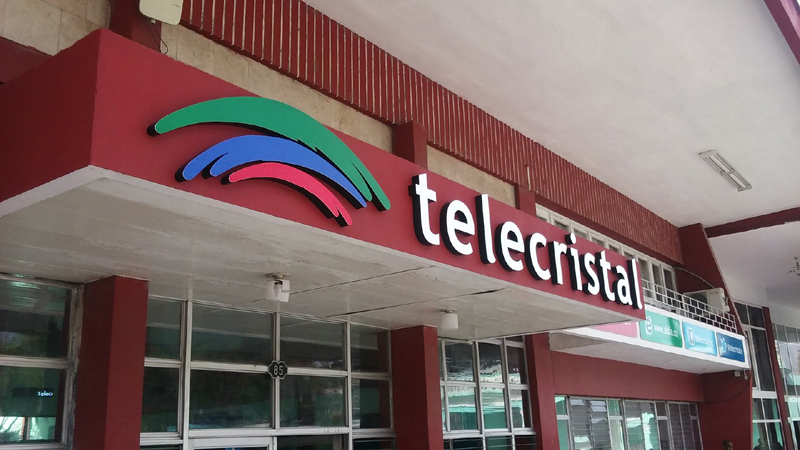
Telecristal, the provincial television center of Holguín, part of the ICRT broadcasting system. Photo: Wikimedia Commons (CC BY-SA)
History of the Channel
With the rise of the internet and digital platforms, Cubavisión Internacional expands its online presence, reaching the Cuban diaspora worldwide through streaming and social media.
The channel modernizes its facilities and technical equipment. Satellite coverage is expanded to reach more regions of the Americas, Europe, and Africa, consolidating its international presence.
The Special Period severely impacts Cuban television production. Cubavisión Internacional maintains its signal with limited resources, prioritizing newscasts and low-cost cultural programming.
Cubavisión Internacional is founded. The channel is born out of Cuba's need to project its image abroad during the Cold War, competing informationally with Western media outlets.
Cuba completes nationwide television coverage. The Cuban television system, fully nationalized after the Revolution, provides the institutional foundation for the future international channel.
Cuba was one of the first Latin American countries to have television, beginning broadcasts on October 24, 1950. This early television tradition laid the groundwork for Cuba's audiovisual industry.
Programming and Content
News
The National Television Newscast (NTV) and other news programs offer the official Cuban perspective on national and international events, serving as the Cuban state's informational voice abroad.
Cuban Culture
Documentaries, music programs, dance, and theater showcase Cuba's rich culture to the world. Music — from son to reggaeton — has a special presence in the programming lineup.
Sports
Cuba is a world sporting power and the channel broadcasts baseball, boxing, athletics, and other sports in which Cubans have historically excelled at international competitions and the Olympic Games.
Series and Telenovelas
Cuban dramatic productions are of high artistic quality. National telenovelas and series enjoy popularity not only in Cuba but also in other Spanish-speaking countries.
Children's and Educational
Children's and educational programming reflects the values of Cuba's education system. Programs for children are a core part of the schedule, forming an important part of Cuban childhood.
Cuban Cinema
The Cuban Institute of Cinematographic Art and Industry (ICAIC) has produced world-renowned films. Cubavisión Internacional serves as a showcase for this important cinematic legacy.
"Cubavisión Internacional is the audiovisual bridge between Cuba and its diaspora — between the island and the world that watches it, critiques it, and admires it."